





















Key takeaways
- A pure headless CMS delivers content through APIs with no built-in presentation layer, so developers build and own the entire frontend. A hybrid headless CMS keeps that same API-first delivery and adds visual authoring and presentation management on top.
- This framework is for teams choosing between pure and hybrid once monolithic is off the table and focuses on which architecture actually fits your team, your channels, and your frontend.
- Both models are API-first over REST or GraphQL, so choosing hybrid doesn't cost developers any frontend freedom.
- CoreMedia Content Management System is an enterprise hybrid headless CMS that gives developers full API parity and marketers deep visual editing and omnichannel preview.
Beyond monolithic: deciding between pure headless or hybrid headless
A traditional CMS couples content storage to a single presentation layer, one system rendering one website. That model breaks once a brand has to publish the same content to a website, a mobile app, in-store displays, and a partner API at the same time. A headless CMS solves that challenge. Now the discussion is around which headless CMS model to adopt: pure or hybrid.
According to Gartner's 2025 Magic Quadrant for Digital Experience Platforms, by 2026 at least 70% of organizations will be mandated to acquire composable DXP technology, up from 50% in 2023, so the move off monolithic suites is the baseline, not the debate.
This article answers "which architecture do I choose." If the open question is instead "what will it cost across monolithic, pure, and hybrid", that's a separate analysis with its own decision criteria. From here, monolithic is out of scope. The comparison is pure vs. hybrid CMS on architecture alone.
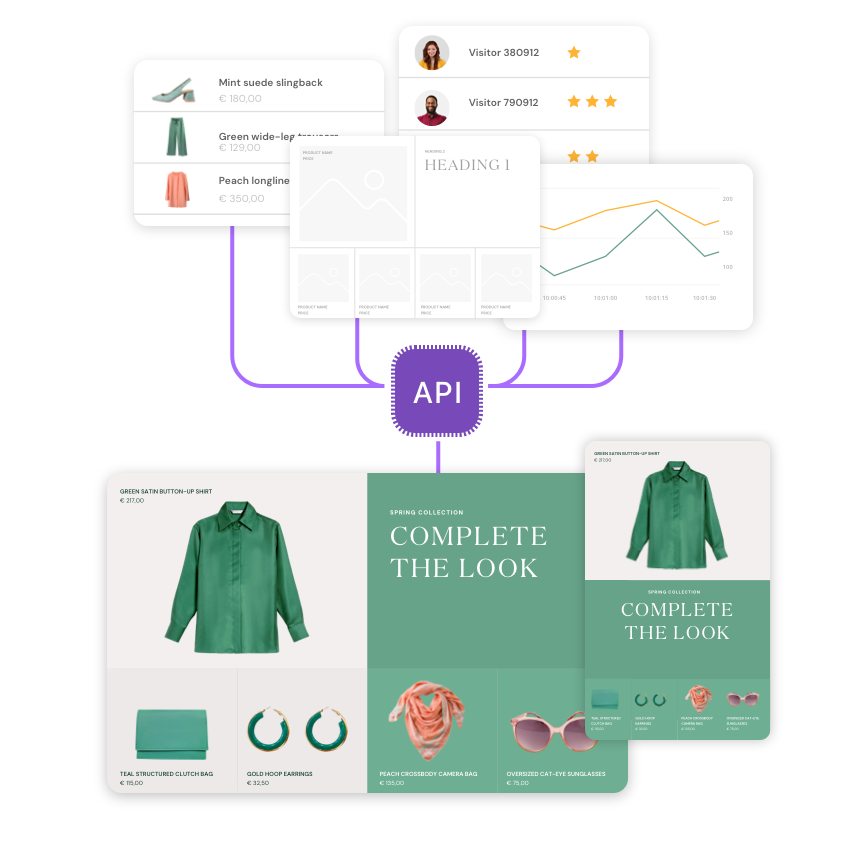
What is a pure headless CMS?
A pure headless content management system is a backend-only, API-first platform: it stores structured content and delivers content over an API to any endpoint, and nothing more. Unlike a traditional CMS, headless systems ship no presentation layer, so the frontend that turns that content into a page or an app isn't part of the product. It's build and maintained as a separate layer.
The mechanics are full decoupling. Content lives as structured, typed data in the content repository and is delivered over REST or GraphQL to whatever consumes it: a web app, a mobile app, a kiosk, a set-top box. Because content is stored once and not bound to a page template, the same content can be pulled into multiple channels without duplicating it.
Owning the frontend means controlling performance directly, load time, caching, image handling, scaling, instead of inheriting the CMS’s rendering. That control is what lets a well-built pure headless frontend hit aggressive load-time and scalability targets.
Advantages of pure headless CMS for developers
Pure headless gives frontend developers complete control of the delivery layer:
- Any modern JavaScript framework works, Next.js, Nuxt, React, with a clean separation between content and code and no built-in template system to design around.
- Developers aren't inheriting rendering assumptions from the CMS, so specialized delivery targets and highly custom frontends are straightforward to build.
- For a team with the engineering depth to own that layer, pure headless removes the constraints a presentation layer would impose.
Why the slowdown is the preview layer, not the API
Pure headless ships no presentation layer in the CMS, so editors author against raw content models with no rendered view until the frontend builds it. The effect on how teams work:
- Every visible change needs a build, so content and engineering run in sequence, not in parallel, and edits wait on the deploy queue.
- The cause is the missing preview surface, not the delivery API, which is why a hybrid model can add preview back without changing the API contract.
- For how this plays out for marketing teams in practice, see [why pure headless slows enterprise marketing].
What is a hybrid headless CMS?
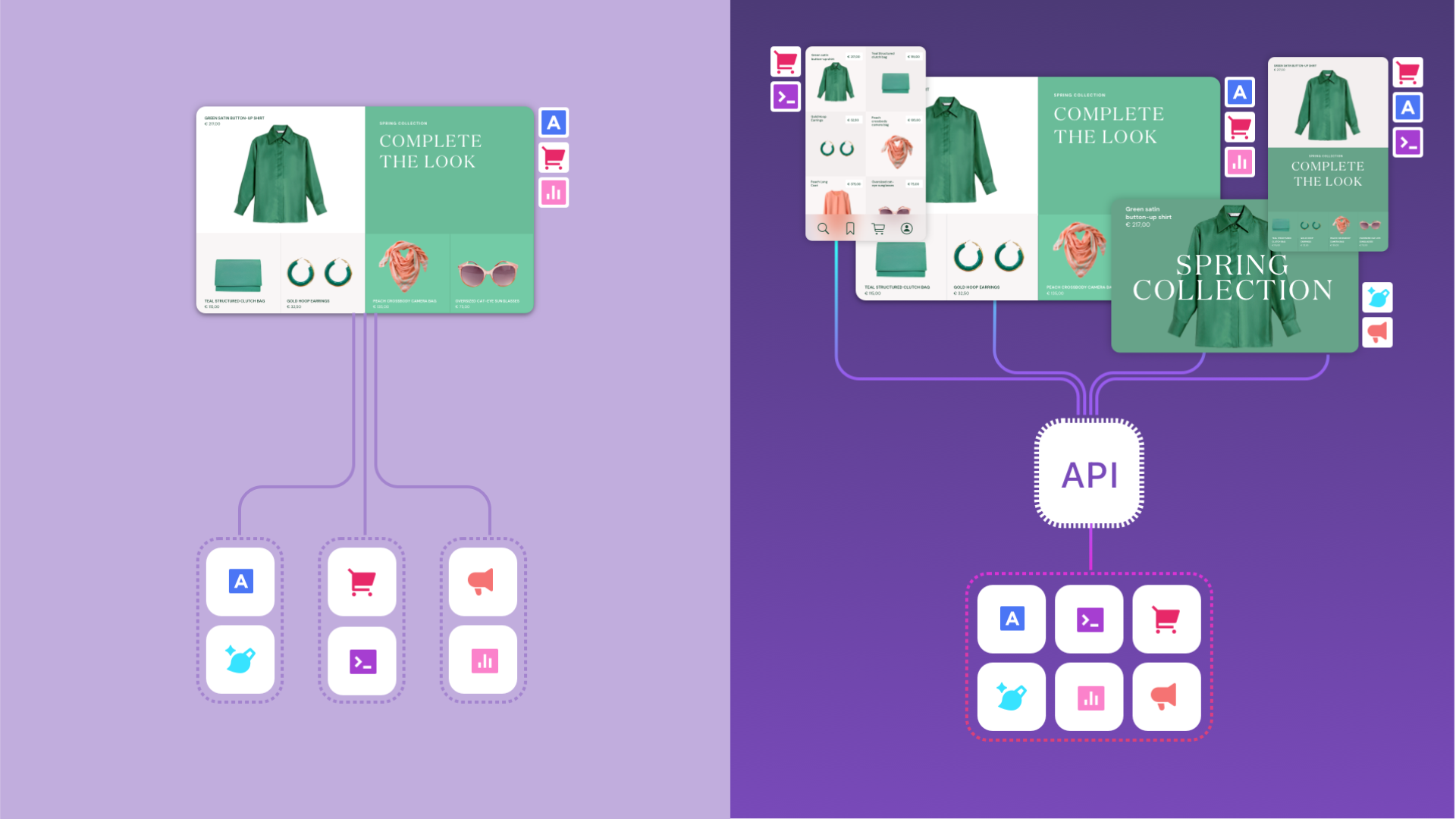
A hybrid headless CMS is an API-first architecture that keeps a visual authoring and presentation-management layer. A hybrid CMS uses the same headless delivery model as pure headless, and adds in-context editing and omnichannel preview on top.
A fair concern is whether a WYSIWYG layer limits the frontend. It doesn't. A hybrid CMS combines the headless delivery API with a built-in presentation layer for authoring, but the API surface developers build against is preserved. Because the presentation layer ships with the platform rather than being built from scratch, a hybrid headless CMS is typically faster to stand up and deploy than pure headless, since the authoring and preview environment is already there.
How hybrid CMS preserves API parity for developers
Hybrid keeps a headless delivery API, REST or GraphQL, intact for custom frontends, while a real-time preview environment renders content the way it will ship. That splits the work cleanly between the two teams:
- Developers build and own the delivery layer. The API surface they build against doesn't change.
- Marketers author with drag-and-drop and WYSIWYG editing, seeing content rendered as it will publish, so they can preview and ship routine changes without waiting on a deploy.
- The two teams work in parallel instead of in sequence, the operating model pure headless can't offer. Edits don't queue behind the engineering backlog.
Preview especially helps where there's a rendered layout to look at:
- Visual surfaces, a website, a mobile app, in-store digital signage: preview shows exactly what will ship, so it earns its keep.
- Non-visual outputs, a voice assistant or a raw content feed into another system: there's nothing to preview, though the same delivery API serves them identically.
Pure vs. hybrid headless: head to head
The comparison below is on architecture vectors only, with no monolithic column and no cost line.
| Feature | Pure headless CMS | Hybrid headless CMS |
|---|---|---|
| Delivery model | API-first, REST or GraphQL, no built-in rendering | API-first, REST or GraphQL, with an optional built-in rendering path |
| Frontend framework freedom | Full; you build the entire frontend | Full for custom frontends; API parity preserved |
| Presentation and preview | None; author against abstract content models | In-context WYSIWYG preview before publish |
| Content authoring | Raw structured forms; no visual editor | Drag-and-drop interfaces and WYSIWYG editors |
| Marketer autonomy | Low; most visible changes need a deploy | High; ship and preview without a deploy |
| Team operating model | Sequential; marketing waits on engineering | Parallel; developers and marketers work independently |
| Omnichannel delivery | Strong, once a frontend is built per target | Strong, with shared preview across targets |
| Integration and composability | Custom-built connections to other systems | Often pre-built connectors plus low-code integration |
A product team shipping one high-performance web app with a dedicated frontend crew can almost ignore the presentation and preview row. For a multi-market brand where a dozen editors publish daily, marketer autonomy and team operating model are essential.
How to choose between pure headless and hybrid headless CMS?
Choose between pure and hybrid headless by evaluating five architectural questions, not a budget. These are about fit, ownership, and how work flows between teams.
- Frontend engineering maturity. Does the team have the capacity to build and maintain the entire presentation layer, including server-side rendering, image handling, edge caching, and accessibility? Pure headless assumes you do. Hybrid gives you that layer if you'd rather not own all of it.
- Presentation ownership. Who needs to control what renders, engineering or marketing, and how often does that layer change? If marketing changes layout and content weekly, routing every change through a deploy is a structural bottleneck, and a visual authoring layer is what removes it. That also lowers day-to-day development dependency and the maintenance burden on IT.
- Channel topology. How many delivery targets do you have, web, apps, signage, kiosk, contact center, AI surfaces, and how much do they share a single content model? The more targets drawing from one model, the more a shared authoring and preview layer earns its place. A single specialized channel doesn't need one, but organizations that face constant channel expansion usually need an architecture that can grow with them.
- Integration and composability. How many existing systems, commerce, CRM, DAM, analytics, must the CMS plug into, and are those connectors built in-house or pre-built? Integration load often decides more than the headless CMS model itself. According to Gartner's DXP research, 85% of the effort and cost in a DXP program goes to integration rather than the platform itself, which is why this criterion often outweighs the pure-versus-hybrid question in any CMS project.
- Governance across teams. How do developers and marketers hand off work today, and where does that handoff stall? Map where it stalls now, including who governs customer data, and choose the architecture that removes that specific bottleneck rather than the one with the longer feature list.
Walk a stakeholder group through these five in order and the answer tends to surface on its own, because it exposes where your current process actually breaks.
When to deploy pure headless
A pure headless CMS is the right call for:
- Frontends that engineering owns end to end, so no one needs a visual editor.
- The in-house engineering depth to build and maintain that frontend: server-side rendering, caching, accessibility, performance.
- Specialized delivery targets like IoT, complex single-page applications, or custom portals, where marketing doesn't need contextual preview.
If engineering owns the experience end to end and marketing isn't blocked by that, the presentation layer is overhead you don't need.
When to choose hybrid headless
Hybrid headless is the right call for:
- Multi-brand, multi-market, multi-channel enterprises that need an intuitive interface that helps teams adapt as channel demands change.
- Teams where marketers need to ship fast and preview independently, without a deploy in between.
- Brand storytelling that spans many surfaces on one shared content model, localization, multiple brands, and daily editorial all running together.
- Editorial teams that own SEO and GEO optimization in context, adjusting titles, metadata, and structure without a developer ticket.
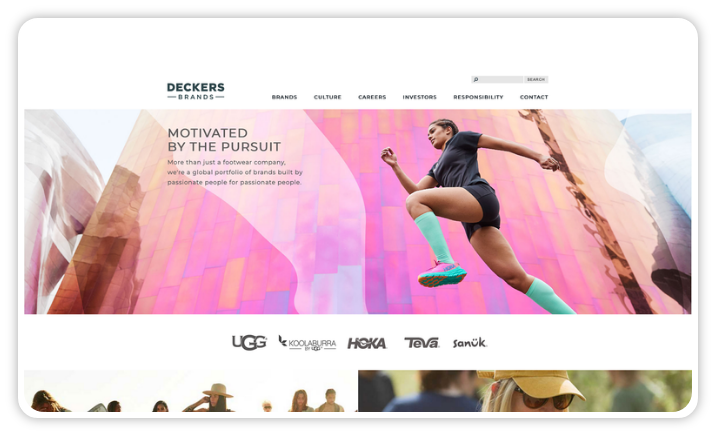
When those conditions hold, the visual authoring and preview layer is what keeps publishing off the engineering backlog. Deckers Brands, for example, runs 12 websites across 5 global lifestyle brands and more than 50 countries on a single CoreMedia platform, helping teams create consistent experiences across the internet while meeting the needs of a multi-brand, multi-market operating model.
CoreMedia's differentiator: hybrid headless CMS architecture
CoreMedia Content Management System is an enterprise hybrid headless CMS: the headless delivery API stays intact for developers, while marketers get deep visual editing and omnichannel preview. For an architect, the relevant detail is how it preserves API parity while adding a genuine authoring layer.
Content flows from a single repository through two delivery paths. A GraphQL headless service delivers JSON to custom frontends (Next.js, Nuxt, native apps, digital signage), and a server-side rendering path delivers fully formatted HTML. Both are served from the same authoring environment, with APIs providing a consistent bridge between systems, so a team can run both at once or phase headless adoption over time rather than committing to a single rendering model up front.
For an architect, four capabilities carry that hybrid model:
- Visual authoring and preview: CoreMedia Studio gives editors integrated omnichannel preview across web, app, tablet, and JSON before publishing, plus in-UI editing and drag-and-drop content slots.
- Embedded AI: CoreMedia KIO, the AI copilot, works inside the authoring workflow for content, metadata, and SEO and GEO optimization, with editor approval on every suggestion, a human always in the lead.
- Composability: a hub architecture with more than 100 pre-built integrations, creating best-of-breed connections to commerce, CRM, DAM, and analytics systems without a rip-and-replace migration.
- Scaling for large teams: concurrent user licensing meters concurrent access instead of gating every named editor, which matters when hundreds of contributors share one content model.
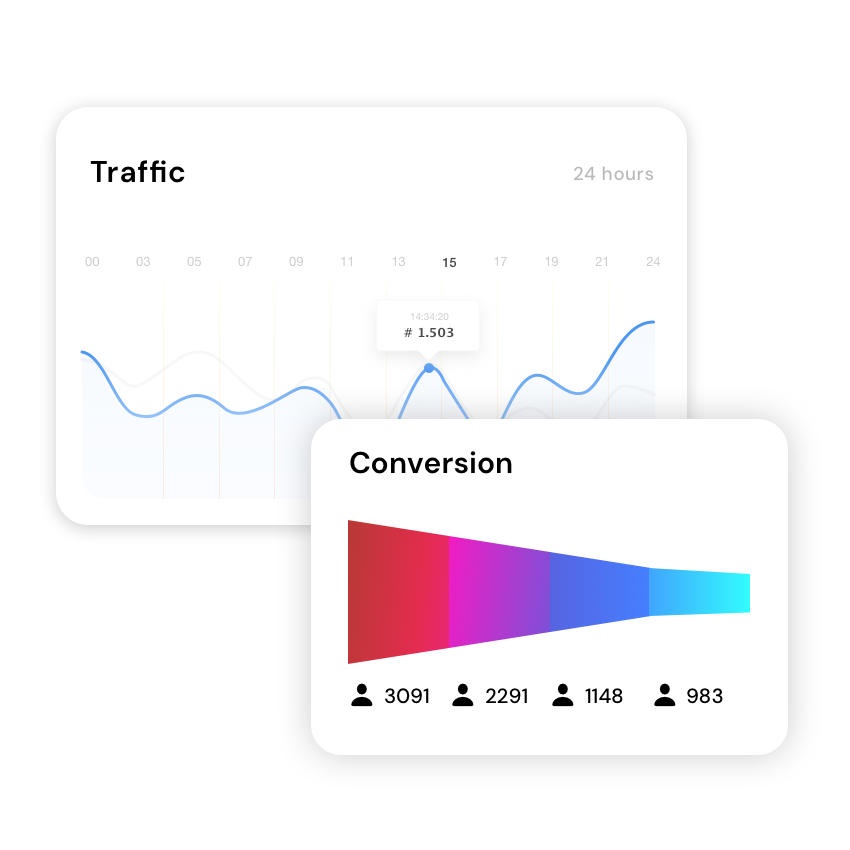
There's also a conversion angle that sits next to the CMS architecture decision. A headless CMS build can deliver fast pages and still leave you with traffic that doesn't convert, because performance and conversion aren't the same problem. We develop that fully, including the "traffic but no conversion" pattern and inspirational commerce, in the same breakdown of the conversion economics of hybrid headless; it's out of scope here, where the altitude is architecture.
Frequently Asked Questions (FAQs)
What's the difference between pure headless and hybrid headless CMS?
Pure headless has no built-in way to preview or edit how content will look, developers build that entirely from scratch. Hybrid headless includes it: a visual authoring and preview layer built into the platform, so marketers can see and publish routine changes themselves, without waiting for a developer to build and deploy that view first.
Does a hybrid headless CMS restrict my frontend developers?
No, a hybrid headless CMS does not restrict frontend developers. The delivery API stays intact, so frontend developers keep the same freedom they'd have with pure headless, any framework and full control of the delivery layer, while marketers gain visual authoring and preview on top. Adding the presentation layer changes the marketer's experience, not the developer's API.
Do pure and hybrid headless use the same delivery APIs?
Pure and hybrid headless are both API-first over REST or GraphQL, so they use the same style of delivery API. Hybrid headless adds a preview and authoring layer on top of that API without removing the API surface, which means the content delivery contract your frontends consume is the same in both models.
Can we migrate from pure headless to hybrid without re-architecting the frontend?
Yes, in most cases you can migrate from pure headless to hybrid without re-architecting the frontend because pure headless and hybrid headless share an API-first delivery model, the existing frontend and content model largely carry over. The migration is mostly additive: you gain a visual authoring and preview layer, and you don't rebuild the delivery layer your frontend already consumes.
When is pure headless still the right choice over hybrid?
Pure headless is still the right choice when you have a strong in-house frontend team, and no need for marketer preview. Specialized delivery targets like IoT devices or a complex custom portal, where engineering owns the whole experience, are where pure headless fits better than hybrid.
What's the difference between a decoupled CMS and a headless CMS?
A decoupled CMS and a headless CMS both separate the backend from the presentation layer, but a decoupled CMS still pushes content to a presentation layer it controls, while a headless CMS is presentation-agnostic: the frontend pulls content through APIs and the CMS renders nothing itself. Because the content repository sits behind the API instead of alongside the frontend, decoupled headless architecture also shrinks the attack surface compared with a tightly coupled system.